

BeautySuite vs a generic chatbot: what changes when it is your sector
A generic chatbot answers questions. A receptionist for beauty centres comes with voice, your menu, the AI notice and recording. Pros and cons of each.
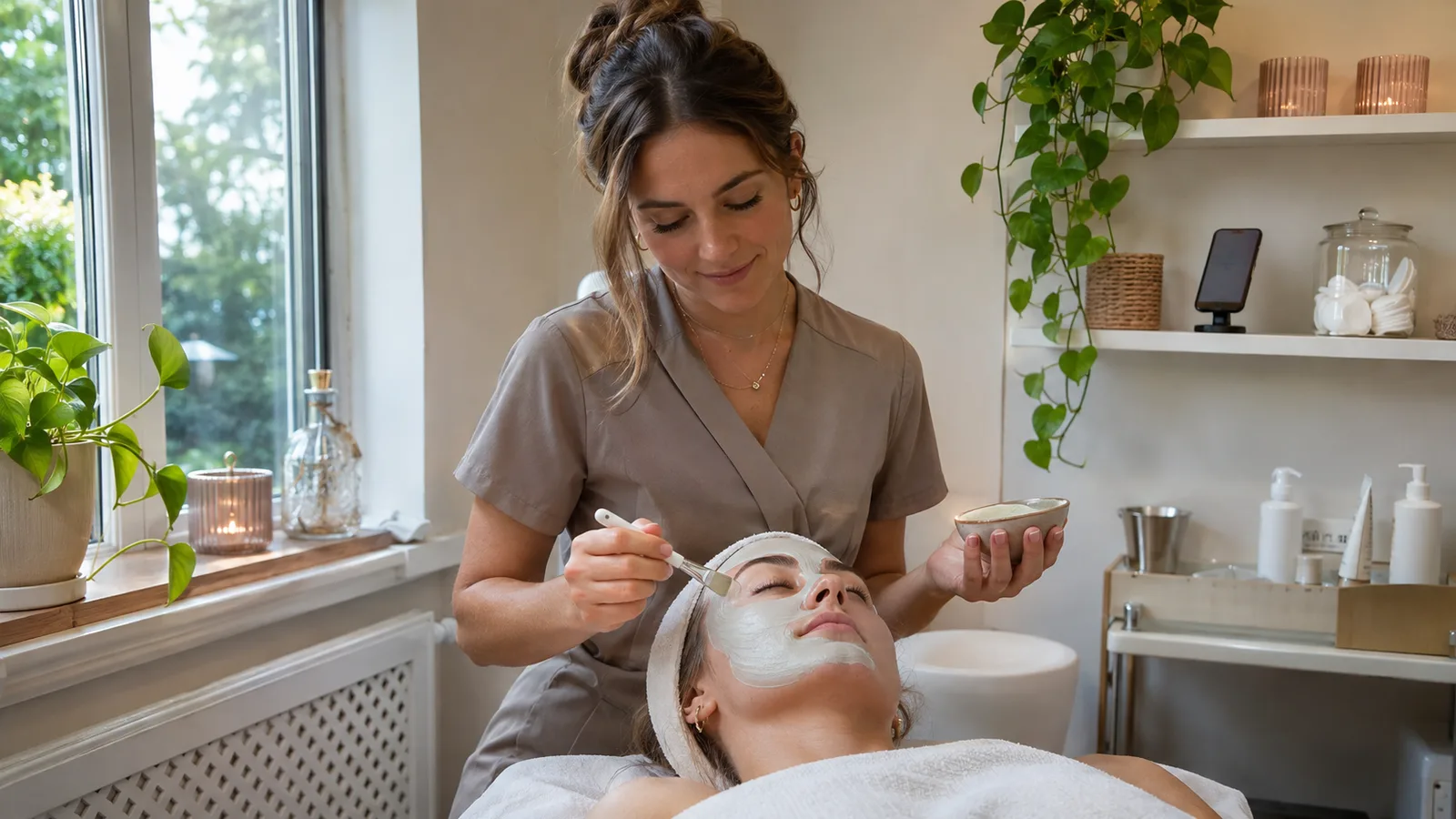
A day in the treatment room of a self-employed therapist working alone, with declared assumptions: which calls she misses and what a voice assistant changes.
The business in this example is an invented example: it is called Cabina Lola, it is in a mid-sized town and Lola does not exist. The figures are a simulation with declared assumptions, not statistics and not results from real BeautySuite clients. They are here so you can put your own numbers through the same calculation.
At 9:00 a facial begins. At 9:25 an unknown number rings and Lola glances at it, her hands in gloves. She does not pick up. At 11:15, with her second client, it rings again. Between the two she has ten minutes to tidy the room: she spends five returning a call, and the person tells her she has already booked at another centre. At 2:00 pm she sits down to eat with her phone in her hand: four unanswered calls and two messages. Lunch turns into reception.
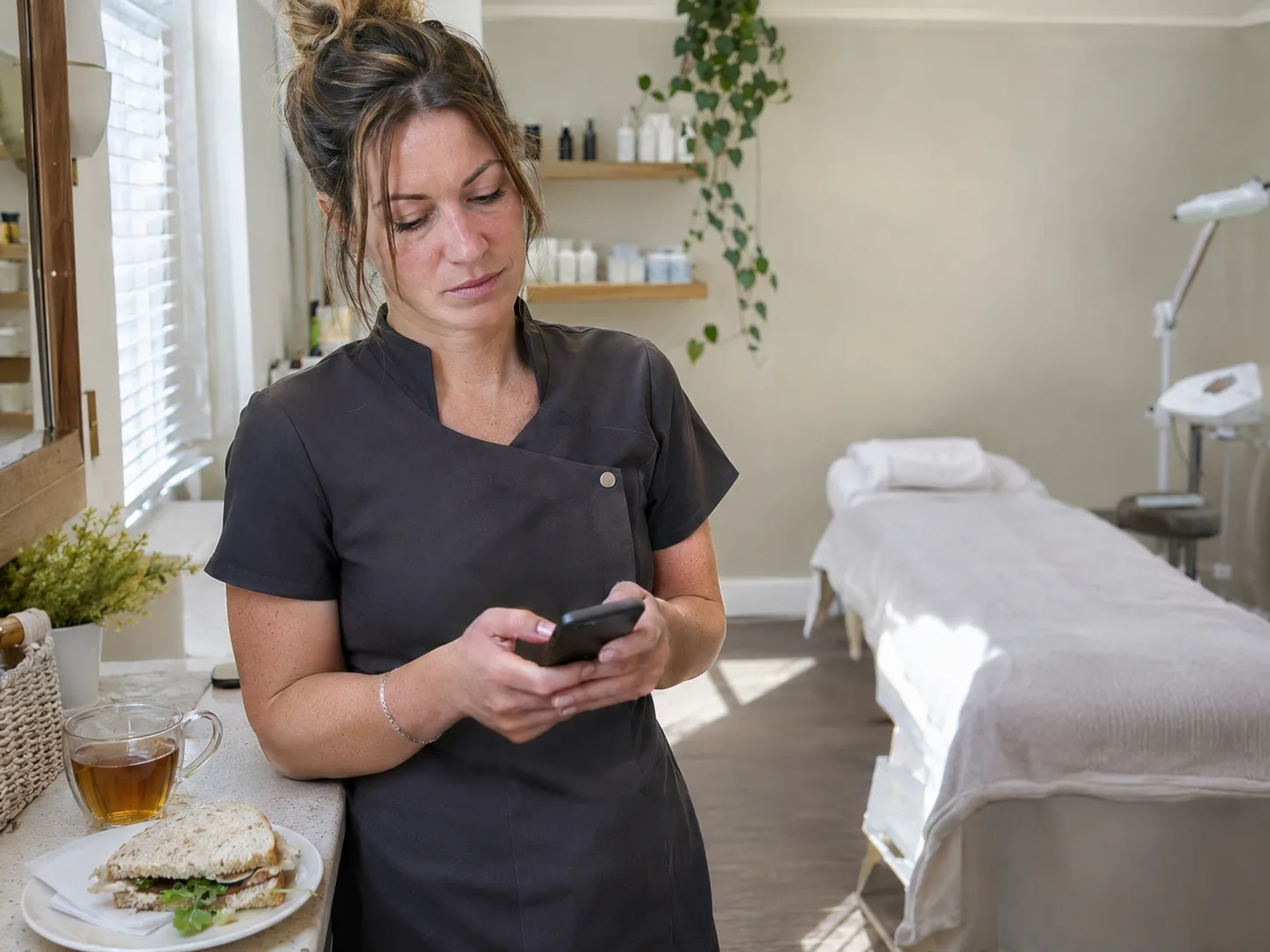
Doing the sums on the assumptions: the 16 weekly enquiries are all returned later, so 3.2 people book (16 times 0.2). And Lola spends an hour of her breaks every week returning calls (20 calls at about 3 minutes each).
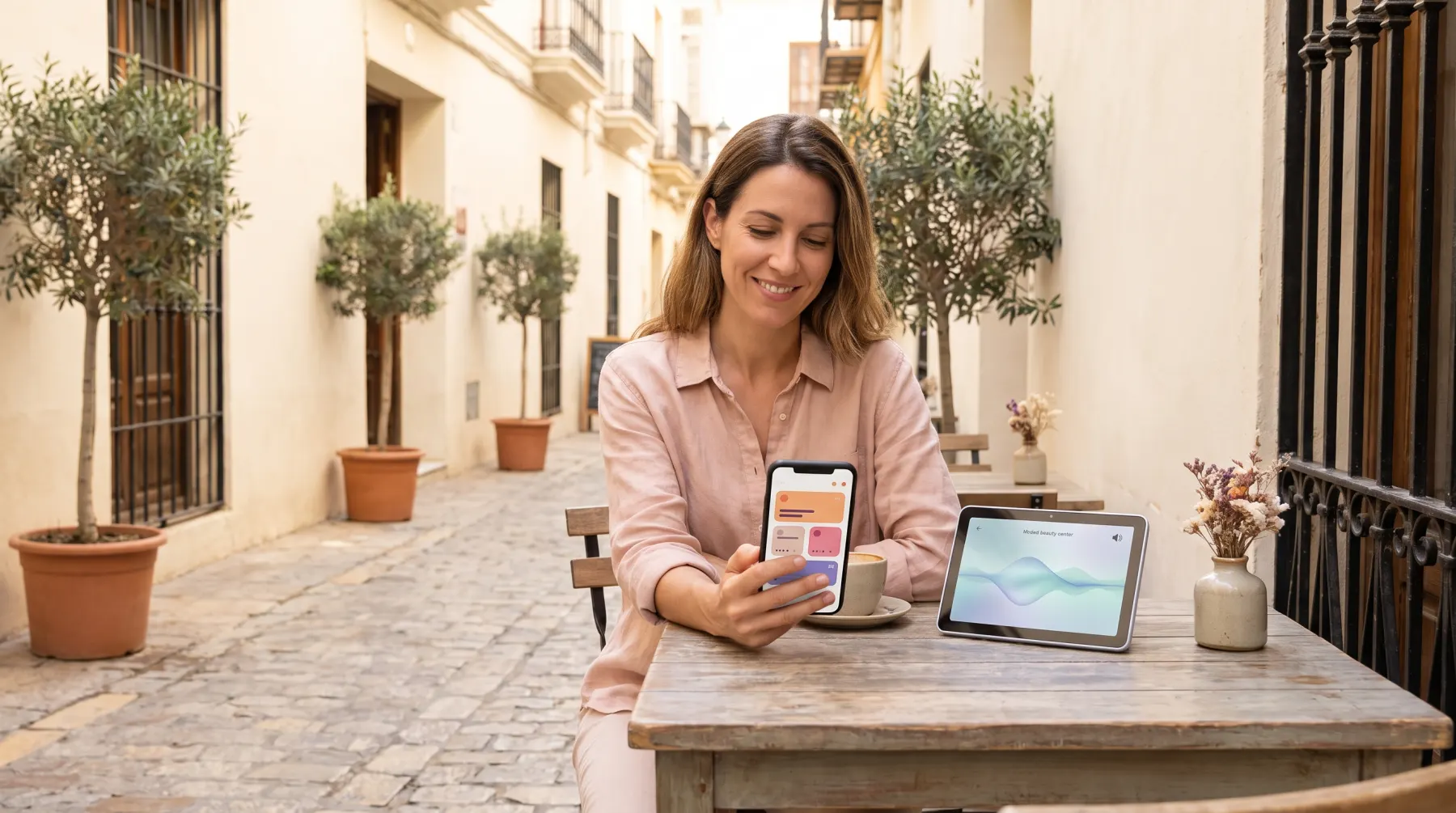
The assistant answers from the call button on her website or from the voice page linked in her profile bio. At 9:25 the person asks how much a facial cleanse costs and whether a gel manicure can be done straight after. The assistant says it is an AI and that the call is recorded, answers from Lola's menu (price and duration of each treatment) and sends the booking link for her Booksy. Lola finds out only at her break, when she reads the summary: “Enquiry about a facial and a gel manicure, same day. Link sent.”
What changes is the moment of the reply. All 16 enquiries are answered straight away: at 3 in 10, 4.8 people book. That is 1.6 more appointments a week than without the assistant, about €72 a week (1.6 times 45) and about €288 a month over four weeks. If in your case the difference is half an appointment a week, the sum changes, which is why it is worth running it with your own numbers before deciding anything.
At 9:40 pm something happens that previously had no answer: someone who has seen Lola's Instagram bio opens the voice page and asks about lash extensions for Saturday. With the room closed, nobody would have answered; the assistant gives the price and duration from the menu and sends the link. The next morning Lola reads it on the dashboard with her coffee.

Two numbers matter most: how many informational enquiries come in each week, and the gap between booking on the spot and booking after a call-back. The €45 and the 3 and 2 in 10 are invented. If Lola received only 6 enquiries, the difference would be about 0.6 appointments; if she received 30, it would be 3. So the first honest step is not to buy anything: it is to note down for two weeks how many calls go unanswered.
The assistant is only as good as her menu. Lola spends an afternoon checking it (she imports it from her public profile and corrects durations and “from” prices) and, once a week, listens to a couple of conversations to see what was said. If a question is not on the menu, the assistant does not invent an answer: it says they will confirm, and the question stays in the summary. And there are no promises of results: if someone asks whether a treatment will suit her skin, the answer is that Lola will assess it in the treatment room.
The cost is the plan's call minutes and the monthly fee, which we do not write here because it changes: both are on the pricing page. The useful question is not whether the assistant is expensive but whether, in your week, at least one appointment is lost on the way to returning calls.
Make a test call to the demo assistant and pick the plan that fits you. No lock-in.
See plans and get startedA generic chatbot answers questions. A receptionist for beauty centres comes with voice, your menu, the AI notice and recording. Pros and cons of each.
Booksy runs your diary and can bring you clients with Boost. BeautySuite answers the phone using your treatment menu. Pros and cons of both, with prices from their websites.

Fresha charges a low fee per professional and adds a marketplace and payments. BeautySuite has no diary and no marketplace: it answers. Pros and cons of both.